
 CS
CS UK
UK EN
ENSelling PV surplus at 1—2 CZK/kWh and then buying grid electricity at several times the price? That makes no sense. A far better deal is to convert solar energy into heat and store it in buffer tanks. Hotjet heat pumps are built for exactly that.
Why pair PV with a heat pump
Photovoltaics produce the most power when you need the least heating — and vice versa. The solution is to stop selling the surplus and instead “store” it as heat in hot-water tanks. The result: lower running costs and greater energy independence.
The connection is technically straightforward. Hotjet supports binary commands, 0—10 V analogue inputs, API communication, and Modbus. Pick whichever suits your setup.
Smart Grid Ready — four states that change the game
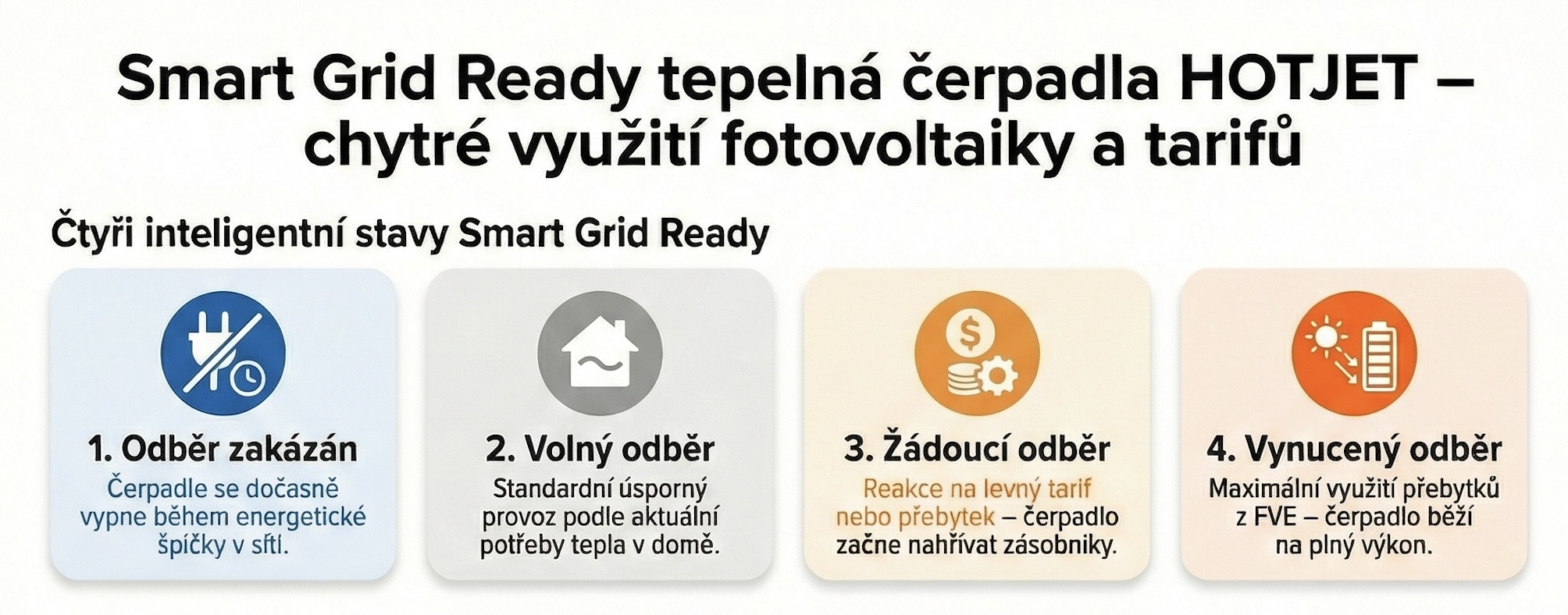
Hotjet heat pumps come with Smart Grid Ready (SG Ready) built in. Two digital inputs control four operating states:
- Consumption blocked — the heat pump is temporarily shut off (e.g. during a grid peak).
- Normal operation — standard mode, the pump heats according to the current setpoint.
- Recommended consumption — a signal that cheap energy is available (PV surplus or a low tariff). The pump starts charging tanks to higher temperatures.
- Forced consumption — maximum use of available energy, the pump runs at full capacity.
SG Ready works even without photovoltaics — for tariff-based control, for example. Combined with PV, though, its potential multiplies.
How it works in practice
As soon as the PV system starts generating surplus, the energy flow meter triggers the control input. The controller evaluates priorities and starts the heat pump. The whole sequence is automatic:
The pump first heats the consumer with the highest priority. Once that tank reaches its limit, an electric backup heater kicks in and brings the temperature up to the PV target setpoint. After the target is met, the system switches to the next priority in line.
Smart charging priorities
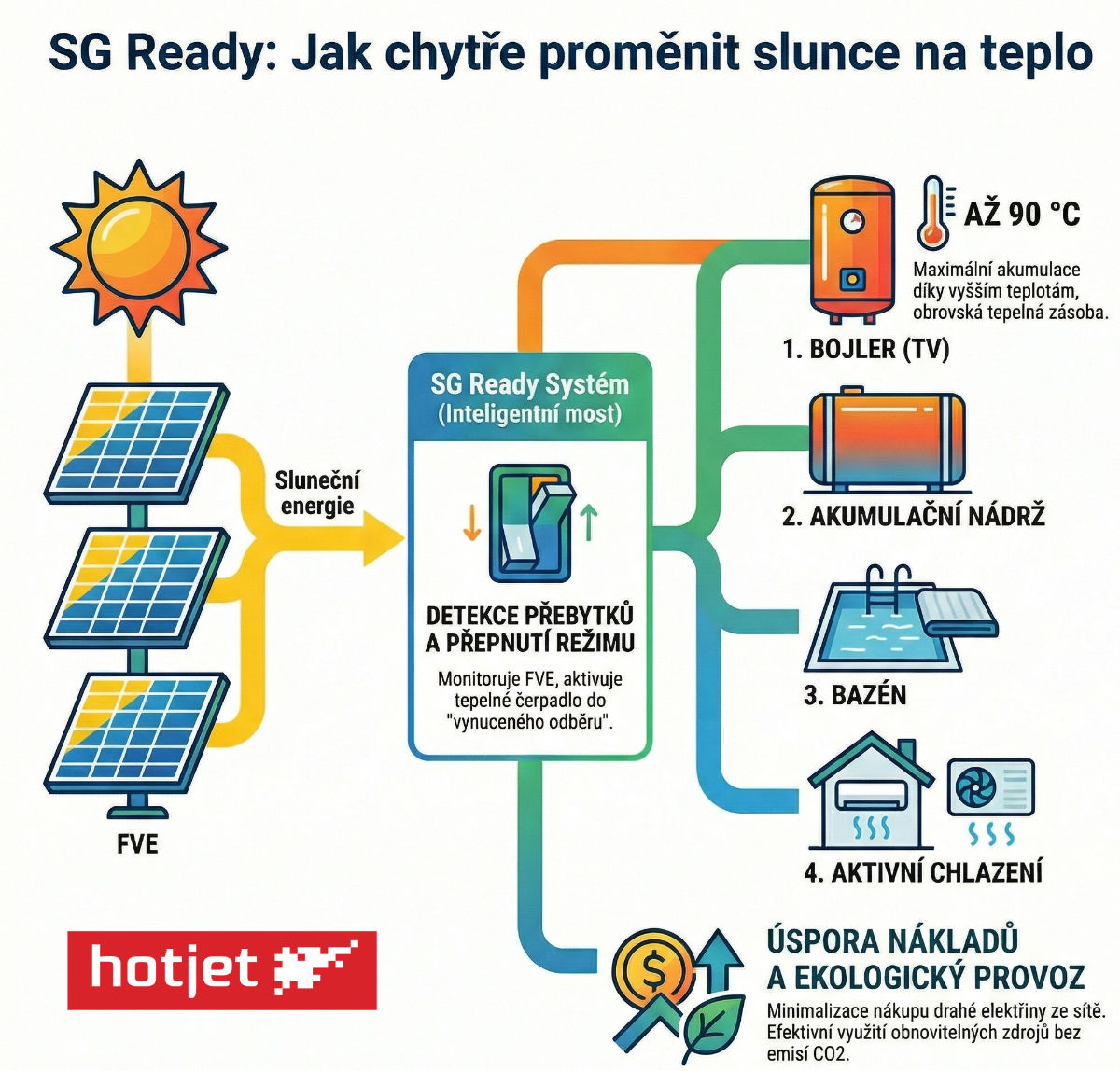
The system lets you set the order in which surplus energy is directed:
- Domestic hot water — the most common first priority; daily consumption is guaranteed.
- Buffer tank charging — storing heat for space heating “in reserve.”
- Pool heating — a seasonal bonus when surplus energy is most welcome.
- Active cooling — sun-powered comfort cooling in summer.
Priorities can be set from “None” up to “Priority 4.” Once one consumer is fully charged, the system automatically moves on to the next.
PV target setpoints
To squeeze the most out of surplus energy, you can set higher target temperatures than in normal mode. Standard DHW heating to 50 °C? With PV surplus, push it up to 90 °C (depending on the tank type). Buffer normally at 45 °C? With photovoltaics, up to 80 °C.
Electric backup heaters in the tanks activate automatically — in the DHW tank, in the buffer, and at the heat pump outlet. That way, no surplus goes to waste even when the system is fully charged.
Cooling and cascades
Cooling combined with PV makes perfect economic sense. The sun shines hardest when you need cooling the most. With the highest priority set, the system switches into comfort cooling mode for more intensive cooling on sunny days.
In multi-unit cascade setups, the PV demand is integrated into the overall control logic. Pumps fed by photovoltaics get priority thanks to a virtually infinite COP — solar energy is essentially free.
Storing heat underground
With ground-source systems there is an extra bonus: in summer, excess heat can be fed back into the ground collector or borehole. The ground regenerates and winter system efficiency rises by 5—10 %. Summer sunshine effectively pre-heats the winter season.
Want to pair PV with a heat pump?
Get in touch — we will help you get the most out of your photovoltaic system in combination with a Hotjet heat pump.