
 CS
CS UK
UK EN
EN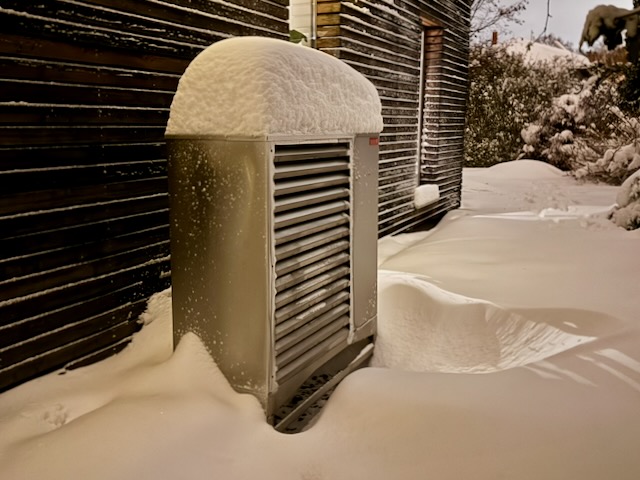
Choosing a heat pump is not rocket science — but there are a few things worth knowing upfront. Here is a practical overview of what to look for. We draw on more than 28,000 installations across Europe and 20 years of experience in heat pump development and manufacturing.
Three Types, Three Situations
Start by figuring out which heat source is available to you:
- Air-to-water — the simplest installation, no borehole or ground collector needed. Works anywhere you have space for an outdoor unit. The vast majority of family houses go with this option.
- Ground-to-water — higher efficiency thanks to stable ground temperatures. You need either enough land for a horizontal collector or a vertical borehole. Quieter operation and no outdoor unit.
- Water-to-water — the highest efficiency (COP up to 6.4). Requires an adequate well and a hydrogeological survey.
What to Focus On
Heat Loss of Your Building
This is the fundamental number — without it, nothing else makes sense. A building energy assessor or HVAC designer will calculate the heat loss for you. The heat pump output is sized accordingly: an oversized pump wastes energy, an undersized one can’t keep up.
COP (Coefficient of Performance)
COP tells you how much heat you get from one kilowatt-hour of electricity. A COP of 5 means: 1 kWh of electricity in, 5 kWh of heat out. Higher COP = lower running costs. But watch out — COP is measured under specific conditions (e.g. A7/W35 = outdoor air 7 °C, heating water 35 °C). Always compare units at the same operating point.
For seasonal comparison, look at SCOP — the weighted average over an entire heating season, which gives a more realistic picture of real-world performance than a single-point COP value.
Noise
A topic people tend to overlook — until the neighbour starts complaining. Modern heat pumps have sound power levels between roughly 45 and 60 dB(A). But the raw decibel figure is only part of the story. What matters just as much is the character of the sound.
Frequency-controlled (inverter) compressors in cheaper units often produce an annoying high-pitched whine — so-called tonal components — that is far more disturbing than a louder but uniform hum. When comparing models, ask for noise test results per ČSN EN 12102 and specifically whether the unit exhibits tonal components. A heat pump that measures 55 dB(A) without tonal issues can feel quieter than one that measures 50 dB(A) with a piercing whistle.
Heating System Type
The type of heat distribution in your house has a direct impact on efficiency:
- Underfloor heating (low temperature, ~35 °C) — ideal for a heat pump. The lower the required water temperature, the higher the COP and the lower your bills.
- Radiators (higher temperature, ~55 °C) — the pump has to work harder, COP drops. Still perfectly doable, but less economical than underfloor heating.
Both systems work fine with a heat pump. If you are building new or doing a major renovation, underfloor heating is the better match.
Refrigerant: Future-Proof or Phasing Out?
Not every heat pump has the same shelf life ahead of it. Older refrigerants like R410A and R32 carry a high Global Warming Potential (GWP), and the European F-gas regulation is progressively restricting their availability. When choosing a unit, pay attention to which refrigerant it uses:
- R290 (propane) — a natural refrigerant with a GWP of just 3. An ecological choice with no performance compromises. Well suited for outdoor units.
- R454C — a mildly flammable refrigerant with a GWP of 148. A practical solution where propane cannot be used for safety reasons, for example in indoor installations.
A heat pump running on a modern refrigerant is an investment that won’t run into regulatory dead ends a few years down the road.
Photovoltaics and Smart Grid Ready
If you already have — or plan to install — photovoltaic panels, check whether the heat pump can automatically use PV surplus. The Smart Grid Ready function means the pump responds to signals from your PV system and the grid: when there is excess solar energy, it kicks in automatically and stores heat in buffer tanks instead of you selling that surplus at a fraction of the retail price.
This turns your heat pump into a thermal battery: free solar energy goes into hot water and heating reserves you would have paid for later. The combination of PV and a heat pump is one of the most effective ways to maximise self-consumption and cut your energy bill.
Installation Quality
Installation quality is decisive. A poorly designed or badly commissioned system will have problems regardless of how good the heat pump itself is. Pipe sizing, buffer tank placement, control settings, antifreeze concentration — these details separate a trouble-free system from a headache. Work with a proven, certified installation company.
Think Total Cost, Not Just the Price Tag
The purchase price is only the beginning. The real economics of a heat pump are determined by total cost of ownership (TCO) over its lifetime — and that is where different brands and solutions differ dramatically.
Running costs: A pump with a higher COP saves thousands of CZK on electricity every year. The difference between a seasonal COP of 4.0 and 5.0 is roughly 3,000—5,000 CZK per heating season for a typical family house. Over 15—20 years, that adds up fast.
Service and support: Ask how much a service visit costs, how quickly spare parts are available, and whether the supplier offers remote diagnostics. Remote monitoring can detect a problem before you even notice it — and resolve many issues without dispatching a technician. That saves both time and money.
Warranty: The standard warranty on a heat pump ranges from 2 to 5 years. Some manufacturers offer an extended warranty of up to 10 years on the compressor and the entire system — a clear signal of confidence in their own product.
A ballpark acquisition cost for an air-to-water heat pump including installation is 150,000 to 350,000 CZK depending on the type and output. Typical operating savings compared to a direct electric boiler are 50—70 %.
Subsidies
Subsidy programmes for heat pumps have historically been available through the “Nová zelená úsporám” (New Green Savings) scheme, with grants in the tens of thousands of CZK. We track the current status of subsidies and eligibility conditions and keep them updated on a dedicated subsidies page.
Not Sure Where to Start?
Get in touch or give us a call. We will help you choose the right heat pump based on your house, budget, and site conditions.