
 CS
CS UK
UK EN
EN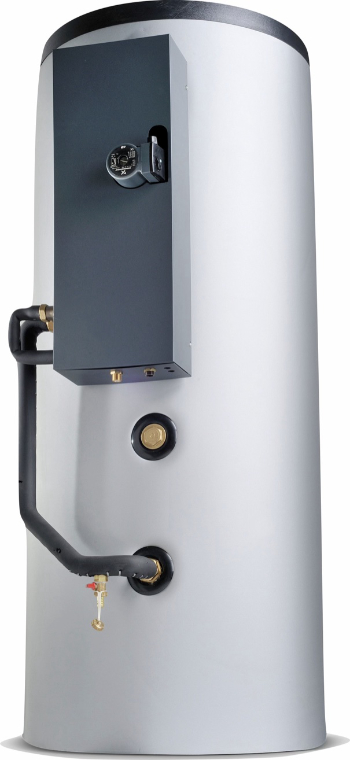
Fresh Water Heater HOTJET FW
- Type: Fresh water heater (flow-through DHW)
- Principle: Stainless steel SWEP exchanger (AISI 316L)
- Thermal output: 70 kW
- DHW flow rate: 25 l/min
- Outlet temperature: 45–55 °C (control ±1 °C)
- Control: Integrated in Hotjet heat pump
- Charging: HP, electric element (PV), solar, boiler
- Compatibility: All Hotjet heat pumps
Fresh Water Heater Hotjet FW – Clean Hot Water Module
Hygienically clean hot water without a boiler. An integrated heat exchanger station controlled directly from the heat pump – for the price of a stainless steel tank.
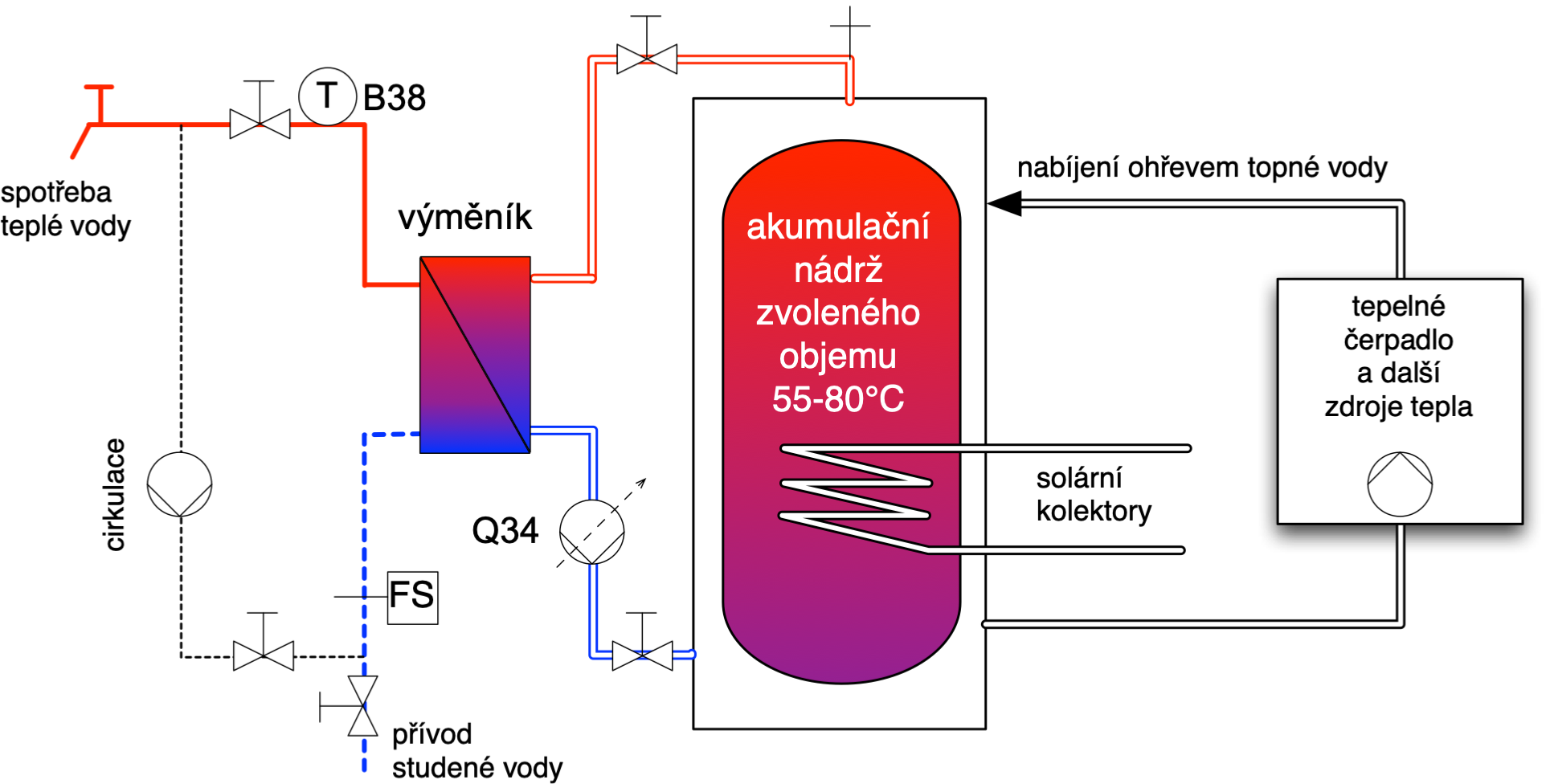
The heat pump charges a buffer tank with heating water. When you open the tap, cold drinking water flows through the exchanger and is instantly heated to 45–55 °C. No stagnation, no storage of drinking water, no dead legs.
Why not a boiler?
Tank-based DHW heating has a fundamental drawback: water stands still, accumulates sediment and scale, and becomes a breeding ground for bacteria. Flow-through heating solves this in principle – drinking water is only heated at the moment of use as it passes through the exchanger.
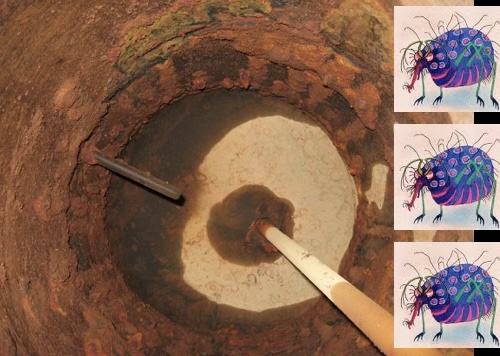
Legionella pneumophila – bacteria that thrive in standing water at 25–45 °C. Inhaling contaminated aerosol (e.g. while showering) can cause severe pneumonia. Flow-through heating minimises this risk.
How it works
- Tank charging – the heat pump heats the water in the buffer tank, ideally during off-peak tariff or from PV surplus
- Heat battery – the tank stores energy in a closed heating water circuit, no drinking water inside
- Flow-through heating – when the tap opens, cold water flows through the exchanger and is heated instantly
- Precise control – electronics modulate the circulation pump and maintain output temperature at 45–55 °C
Connection diagram
SWEP heat exchanger parameters
| Parameter | Primary (heating water) | Secondary (DHW) |
|---|---|---|
| Thermal output | 70 kW | |
| Inlet temperature | 55 °C | 10 °C |
| Outlet temperature | 16.7 °C | 50 °C |
| Flow rate | 1,573 kg/h (26 l/min) | 1,508 kg/h (25 l/min) |
| Pressure drop | 37.5 kPa | 34.6 kPa |
| Heat transfer area | 2.46 m² | |
| Number of plates | 41 | |
| Connection diameter | DN24 (24 mm) | |
| Material | Stainless steel AISI 316L | |
Advantages
- Maximum hygiene – no standing drinking water, minimised Legionella risk, turbulent flow prevents scale build-up
- Full heat pump output – charging the buffer tank at full HP output without limitations from a coil exchanger inside the tank
- Higher COP – an oversized exchanger allows lower tank temperatures (45–50 °C), so the heat pump runs more efficiently
- Tank longevity – a neutral buffer tank with no contact with drinking water, no corrosion, no anode maintenance
- Easy capacity expansion – increase system capacity at any time by connecting additional tanks of any volume
- Custom tank and exchanger combination – choose tank volume and exchanger size to match the building’s actual needs
- Electric element charging from PV – the buffer tank can be charged with standard electric heating elements from PV surplus
- Retrofit to existing tanks – easy connection to existing buffer or stratification tanks, no structural work needed
- Unlimited hot water – as long as the tank is charged you have DHW; hot tub + shower simultaneously without loss of comfort
- Control from HP at no extra cost – control is integrated directly in the Hotjet heat pump, no additional expenses
- Neutral tank (chameleon) – the tank switches function as needed: DHW, heating, cooling; PV integration, boiler and passive cooling in one
- Tank chaining – connect additional tanks of any volume to increase capacity, swap the exchanger to increase flow output
What’s in the box
- Stainless steel SWEP heat exchanger (AISI 316L, oversized)
- Circulation pump (electronic, modulated, class A)
- Flow switch (automatic activation on demand)
- Fittings and insulation (complete accessory kit)
- Buffer tank with thermal insulation (200–1,000 l)
- Optional heating element (2–6 kW for reheating / PV charging)
Use cases
Family house with a heat pump – the HP charges the tank mostly during off-peak tariff, COP > 4 thanks to lower charging temperature. Hot tub + shower simultaneously without comfort loss. Typical setup: 300 l tank, 25 l/min flow.
Renovation with an existing tank – the old stratification tank stays, you simply add the Hotjet FW module. No demolition, no new piping – just connect the heating and water circuits. Installation in 1 day.
Commercial building (gym, guesthouse) – the oversized exchanger covers even peak evening demand in larger buildings. In summer, the system can switch to cooling mode. Typical setup: 800 l tank, 50 l/min flow.
PV integration – the neutral tank acts as thermal storage for PV surplus. Smart control automatically uses solar energy. Combined DHW, heating and cooling from a single tank.
DHW heating solution comparison
| Criterion | Fresh water heater Hotjet FW | Enamel boiler with coil | Boiler with ext. exchanger | Buffer with flow-through coil | Buffer with immersed tank |
|---|---|---|---|---|---|
| Diagram | |||||
| Technical design | ✓ External exchanger, minimal DHW storage, instant heating | Spiral coil inside an enamel tank | External exchanger + circulation pump | Stainless steel spiral exchanger in the upper part of the buffer | Stainless steel DHW tank submerged in the buffer (tank-in-tank) |
| Advantages | ✓ Maximum water hygiene, precise temperature control, minimal Legionella risk, tank longevity, easy expansion, custom sizing | Simple design, lower initial cost | High heat exchange efficiency, two-source option | High heating output, large DHW volumes possible | Separated heating and drinking water, long stainless steel life |
| Disadvantages | ✓ Less well-known, no DHW heating without electricity | Lifespan, scale, corrosion, water quality issues | Same as above + extra circulation pump for DHW | Unstable output, poor heat transfer, higher temperatures needed | Outdated design, difficult cleaning, slow charging, cannot cool the buffer |
| HP output transfer | ✓ Full HP output without limitations – ideal for low temperatures | Limited transfer, small exchanger area limits output | Excellent transfer even at small temperature differentials | Good transfer, flow-through principle effective | Very good thanks to the submerged tank |
| Multi-source charging | ✓ Flexible – solar, boiler, electric element from PV | Electric element (PV), limited options | Easy multi-source connection | Multiple exchangers in buffer, electric element | Electric element in buffer, solar exchanger |
| Legionella risk | ✓ Minimal – flow-through heating, almost no standing water | Yes – requires heating to 60–65 °C | Yes – standing water, heating to 60 °C needed | Less critical – flow-through principle | Yes – water storage, disinfection required |
| Anode required | ✓ No – no DHW stored in enamel tank | Yes – replacement every 1–2 years | Yes – enamel requires anode | No – stainless steel exchanger | No – stainless steel inner tank |
| Serviceability | ✓ Excellent – no boiler to clean, easily accessible exchanger | Medium – anode access required | Good – external exchanger accessible | Good – exchanger accessible from top | More complex – limited access to inner tank |
| Material in contact with DHW | ✓ Stainless steel AISI 316L (exchanger) | Enamel (titanium) | Enamel + stainless steel exchanger | Stainless steel (exchanger) | Stainless steel (inner tank) |
| Output stability | ✓ Very high – independent of DHW storage | Drops as heating circuit temperature falls | Very stable thanks to large exchanger area | Good – depends on flow and buffer temperature | High – large heat transfer area |
Hotjet control supports all of the above DHW heating systems – each has different advantages, disadvantages, cost and lifespan. We can get the maximum out of every system.
| Heat exchanger | SWEP (brazed stainless steel) |
| Thermal output | 70 kW |
| Heat transfer area | 2.46 m² |
| Primary (heating water) | 55 → 16.7 °C / 1,573 kg/h (26 l/min) |
| Secondary (DHW) | 10 → 50 °C / 1,508 kg/h (25 l/min) |
| Pressure drop | Primary 37.5 kPa / Secondary 34.6 kPa |
| Connection diameter | DN24 (24 mm) |
| Material | Stainless steel AISI 316L |
| Buffer tank volume | 200–1,000 l |
| Circulation pump power | 30–90 W (modulated, class A) |
| DHW outlet temperature | 45–55 °C (control ±1 °C) |
You may also like
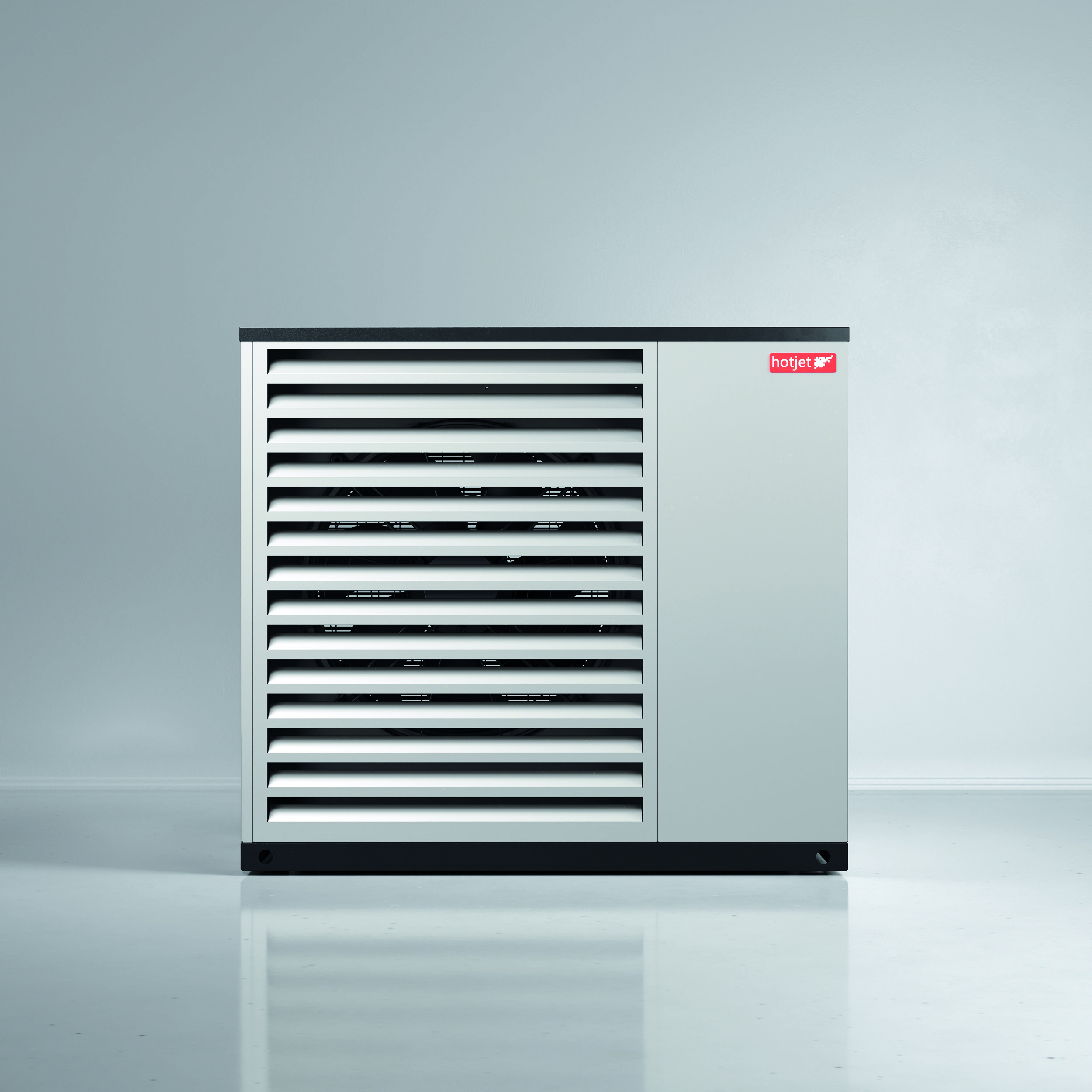 Up to 20 kW
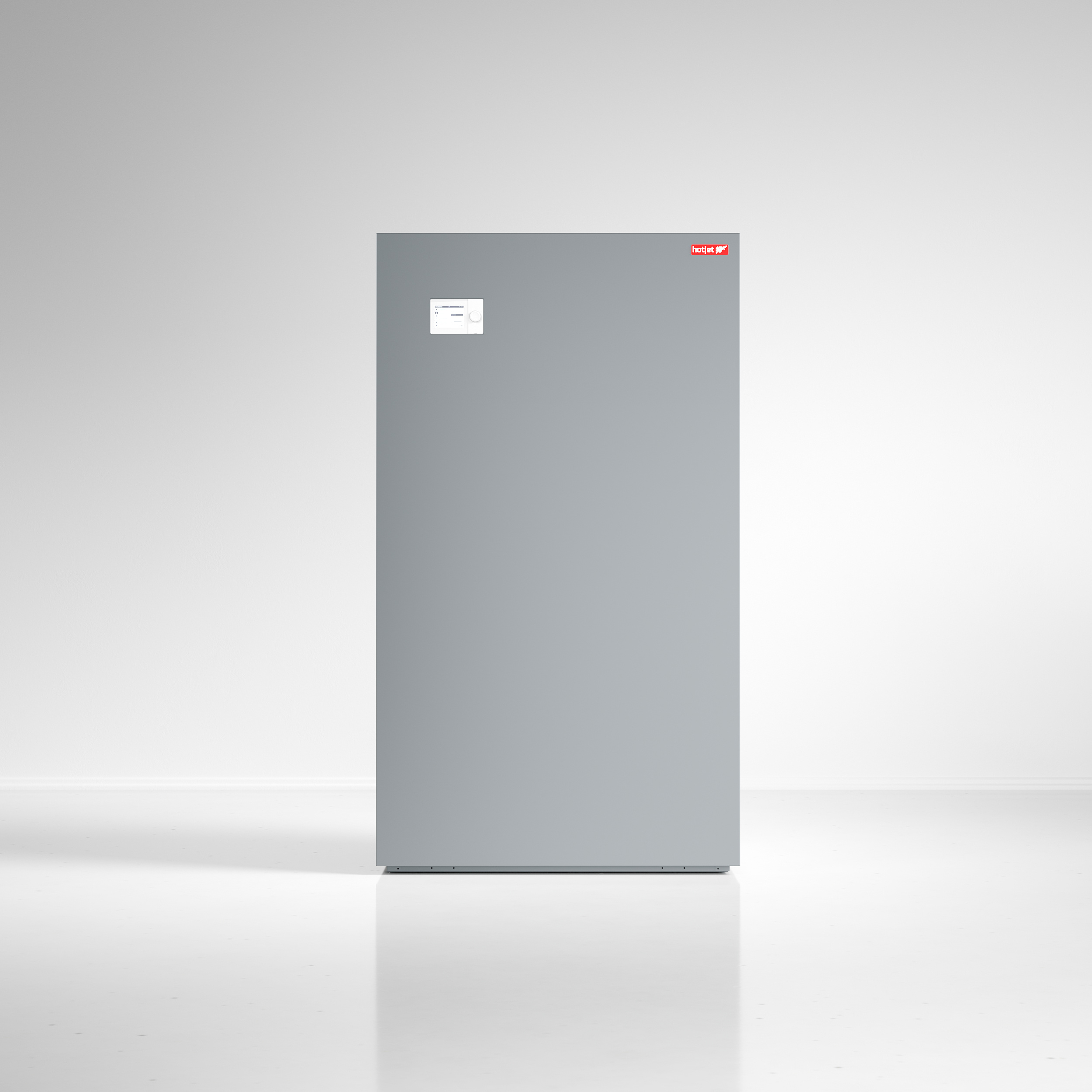
 Hotjet ZETXe Heat Pump
- Type: Air-to-water
- Installation: Outdoor (External)
- Heat loss: Up to 20 kW
- Power variants: 7, 10, 15 kW
 4–20 kW
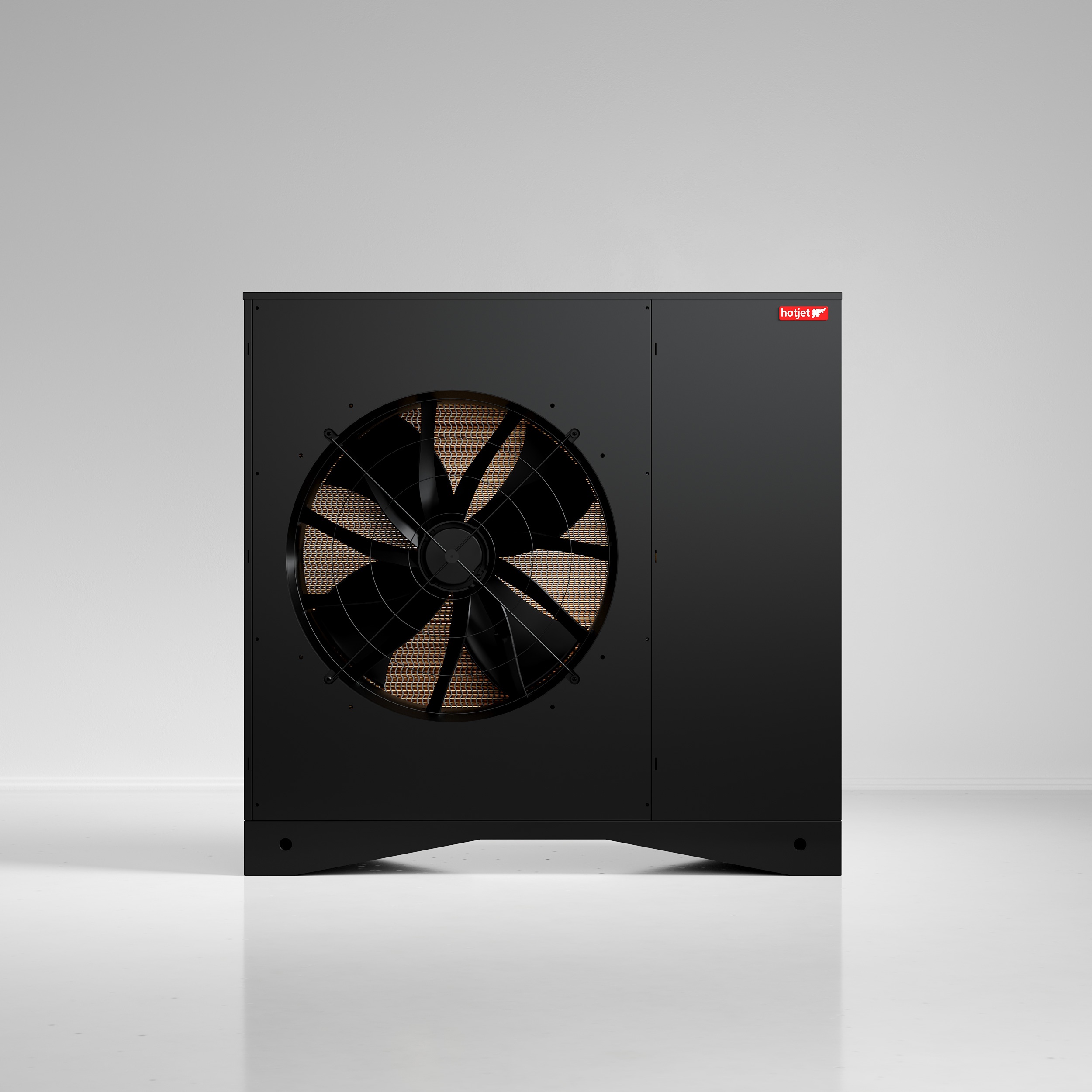
 Hotjet ZETXi Heat Pump
- Type: Air-to-water
- Installation: Indoor (Internal)
- Heat loss: 4–20 kW
- Regulation: Inverter (variable speed)
 15–40 kW
 Hotjet ONE2 Heat Pump
- Type: Air-to-water
- Output: 15–40 kW
- Installation: Outdoor or indoor
- Regulation: On/off (no inverter)